The Myth of Separation: Why Football and Politics Have Never Been Apart
Gabriel Ajala
June 15, 2026
From visa denials to the FIFA Congress standoff, the 2026 World Cup exposes what sport has long avoided: politics and football were never separate
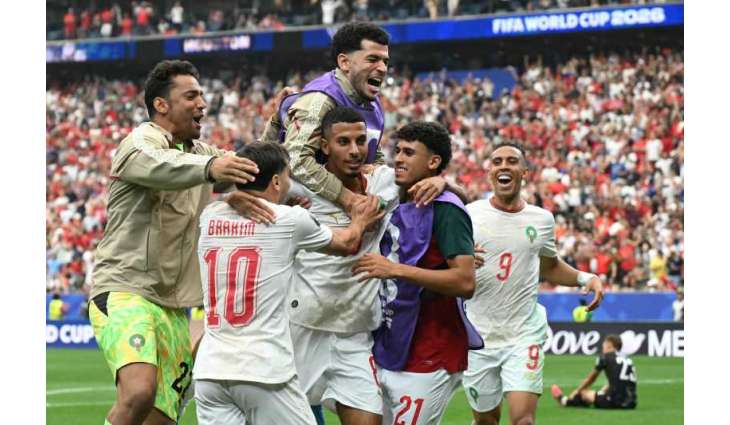
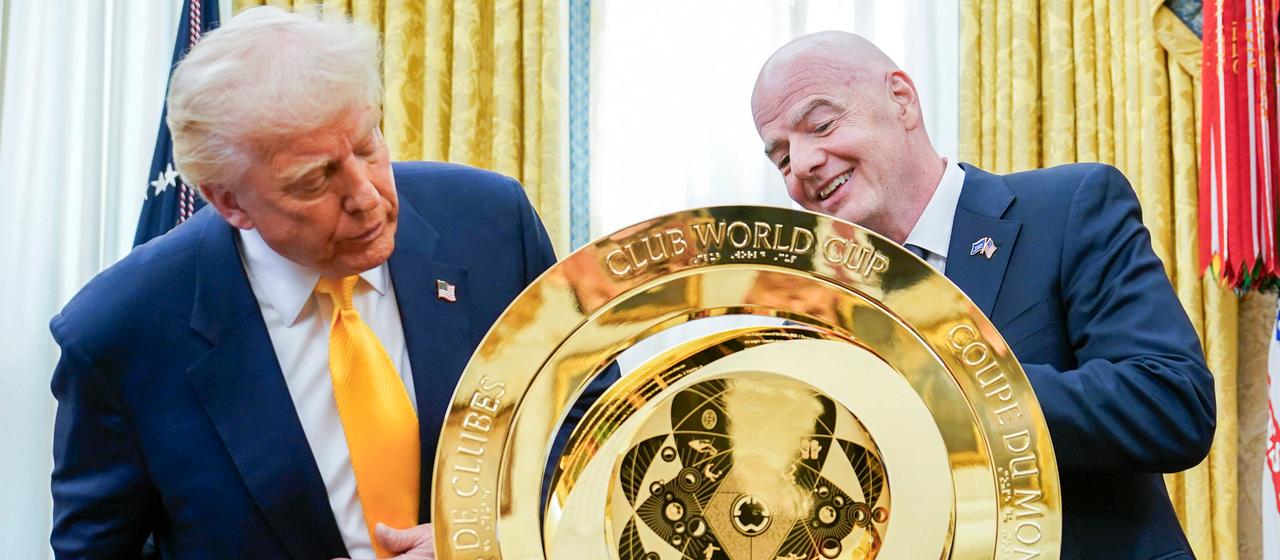
At the 76th FIFA Congress in Vancouver, FIFA President Gianni Infantino invited the representatives of the Palestinian and Israeli football associations to the stage. What followed was not a handshake. The Palestinian FA president refused publicly, deliberately, and on a platform watched by the global football community. The congress, billed as a showcase of unity on the eve of the 2026 World Cup, was briefly but unmistakably consumed by one of the world's most intractable conflicts.
The moment was uncomfortable. It was also entirely predictable.
Because football and politics have never been separate. We have simply been more comfortable and perhaps more commercially incentivised to pretend that they were.
The Fiction That Held
Sports claim to neutrality is one of the most enduring narratives in global culture. The Olympic movement was founded on the principle of a truce between nations. FIFA's own statutes require political independence. "Football unites the world" is not just a tagline, it has been the operating assumption of the sports entire commercial and governance architecture.
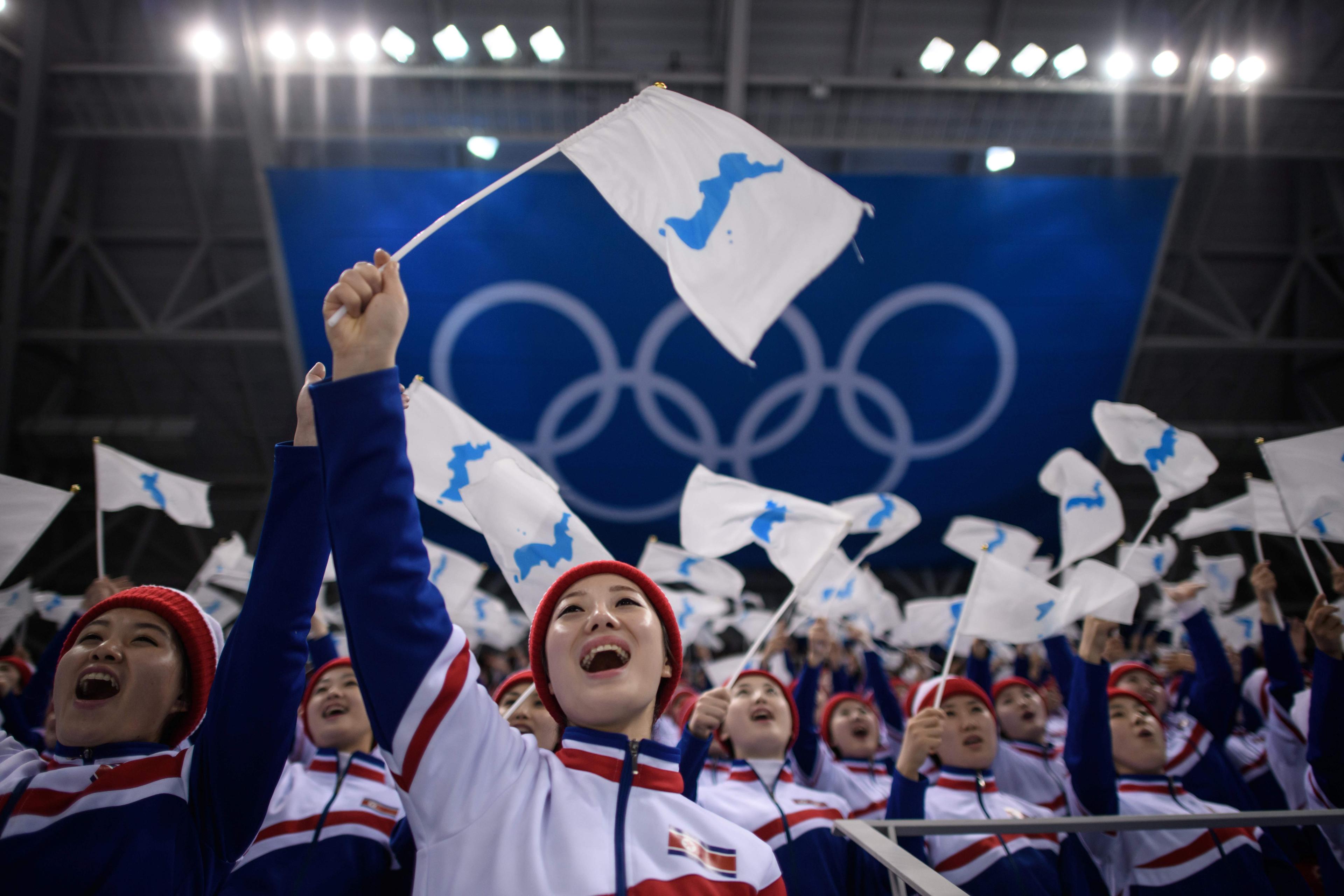
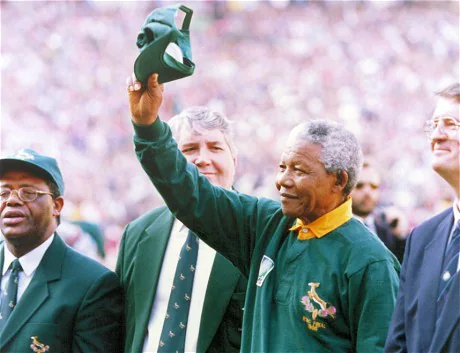
There is evidence, too, that the idealism was never entirely unfounded. In 2005, Didier Drogba dropped to his knees in the Ivory Coast dressing room following his nations first-ever World Cup qualification and, on live television, begged the warring factions of a five-year civil war to lay down their arms. A ceasefire followed. Two years later, Ivory Coast played an international fixture in Bouak (the rebel stronghold) and President Gbagbo visited the same stadium to burn weapons alongside the rebel leader, formally ending the conflict. A footballer had achieved what diplomats could not. At the 2018 Winter Olympics in Pyeongchang, North and South Korea marched together under a unified flag and fielded a joint women's ice hockey team, a gesture of proximity between two nations still technically at war, made possible only within the frame of sport. And in 1995, Nelson Mandela walked onto the pitch at Ellis Park in a Springbok jersey, in front of a majority-white crowd that had long viewed that jersey as a symbol of apartheid and was met with chants of his name. "One Team, One Country". It remains one of the most deliberate and effective acts of political statecraft through sport in history.
These moments are real. They matter. And they are precisely what makes the fiction so durable, because it is not entirely a fiction. Sport can transcend. It has done so. The question is whether the structures built around it are equipped to protect that capacity when the political environment turns against it.
And for long stretches of relative geopolitical stability, those structures held well enough. Tournaments were awarded, broadcast rights were sold, and the business of football expanded at a pace that made the uncomfortable questions easy to defer.
But fictions become exposed under pressure. And right now, the pressure is significant.
As global macro conditions grow more complex (rising nationalism, shifting alliances, active conflicts on multiple continents) the idea that sport occupies a separate, protected space is not breaking down. It is simply becoming harder to sustain. The 2026 World Cup has not created new political tensions. It has surfaced existing ones, faster and more visibly than anyone in the industry was prepared for.
What 2026 Has Made Visible
The examples are not isolated incidents. They are a pattern.
Omar Artan, a FIFA-selected referee, CAF's own referee of the year, carrying official documentation, was denied entry at the United States border ahead of the tournament (UEFA have subsequently placed him as the referee for the 2026/27 UEFA Super Cup). FIFA, for its part, was unambiguous about the limits of its authority: host country immigration policy sits outside its jurisdiction. An accredited referee, hand-picked by the sport's governing body, could be turned away and there was no binding framework to prevent it.
African journalists, holding full FIFA accreditation, faced visa denials or restrictions so narrow that following their own national teams across the tournament's three host nations became logistically impossible. The International Sports Press Association described the situation as "long-standing and unacceptable". The fans themselves navigated a visa environment shaped not by sporting criteria, but by a geopolitical context that football had no part in creating and no mechanism to resolve.
None of this is a failure of sporting administration in the conventional sense. It is a structural exposure, the inevitable consequence of awarding the world's most watched event to a sovereign nation and expecting that nation to park its politics at the door.
The Commercialisation Equation
There is a further dimension that the industry is slower to acknowledge.
The more commercially valuable football becomes, the deeper its entanglement with political and economic interests. Hosting a World Cup in the modern era is not only a sporting gesture. It is a sovereign investment in infrastructure, tourism revenue, soft power, and global positioning. The financial stakes are considerable. Host nations do not remain passive in that context. They become stakeholders. And stakeholders make decisions that serve national interests.
The access restrictions around 2026 are partly ideological. But they are also, in part, a function of that economic logic. When a government has committed at that scale, control over the environment, including who participates in it as a fan, a journalist, or an official becomes part of the return on investment calculation. That is not an accusation. It is an observation about how power operates when the commercial and the political occupy the same space.
The African Context
For the African continent, the intersection of sport, politics, and economics carries a specific and foundational dimension.
The commercial sustainability of sport is not separable from the economic conditions of the populations it serves. Disposable income drives attendance, grassroots participation, and the business case for sustained investment. Where that income is structurally constrained, as it remains across significant parts of the continent, sport cannot build commercially without recourse to subsidy, external funding, or dependency on foreign capital. That is a governance challenge as much as an economic one and it shapes how exposed African football is when the external environment shifts.
Ten African nations qualified for the 2026 World Cup. That is a milestone worth celebrating. But the friction experienced by their fans, media, and officials in accessing the tournament is a reminder that representation on the pitch does not automatically translate to equity in the structures around it.

The Question LA 2028 Is Already Asking
The 2028 Olympics arrives in Los Angeles under the same political conditions, with the same unresolved structural gap at its core: governing bodies that can award hosting rights, but cannot guarantee the access that makes those rights meaningful.
IOC President, Kirsty Coventry recently stated in an interview in early June 2026: "I am confident that in two years we will be able to overcome a number of the challenges that the World Cup is facing right now. But I think that also takes collaboration and learning."
For African sports organisations, federations, and commercial stakeholders, the relevant question is not whether politics will intersect with the next major event. It will. The question is whether the frameworks we operate within (hosting agreements, participant protections, accreditation guarantees etc.) are designed for the world as it actually is, or the world as the industry's founding documents assumed it would be.
Building for the Real World
Sport has always been a mirror of the world it exists in. The 2026 World Cup is reflecting back something the industry has long preferred not to examine too closely that the business of sport and the politics of nations were never as separate as the brochure suggested. As global tensions rise, that gap will only narrow further.
The more commercially significant sport becomes, the more attractive it is as a vehicle for national interest. The more it is used that way, the less credible the claim to neutrality becomes. That is not a counsel of cynicism. It is an argument for realism and for building governance structures that are honest about the environment they operate in.
The real question for footballs stakeholders is whether the sport is being built for the world as it is, or the world as we would prefer it to be.
That question does not have a comfortable answer. But it is the one worth asking.

Related Posts