A Seat at the Table: African Football, the Diaspora, and What the Expanded World Cup Changes
Gabriel Ajala
July 07, 2026
How the 48 team 2026 World Cup reshapes African football: CAF's ten qualifiers, diaspora player eligibility, an $871 million prize pool and the commercial visibility African federations must convert into lasting growth and investment.
The 48-team World Cup is the most consequential structural change to the global tournament in a generation. The debate that preceded and followed its introduction was dominated by established football markets, player welfare, fixture congestion, and competitive dilution. Those concerns are legitimate and should not be dismissed. But they represent a single vantage point on a decision with significantly broader implications.
For African football, the expansion of the tournament from 32 to 48 teams does not read as a threat to quality. It reads as a recalibration of access, financial leverage, and global visibility that the continent has not previously had at this scale. The question worth examining for federations, commercial stakeholders, and those working in African sports business is not whether the expansion was the right call. It happened. The question is whether African football is structurally positioned to extract the full value of the moment it has created.
The Access Argument
The numerical shift is straightforward and its implications have been underplayed. At the 2022 World Cup in Qatar, CAF was allocated five slots from a 32-team field. At the 2026 World Cup, Africa holds ten spots, nine direct qualifiers plus one secured through the inter-confederation play-off in a 48-team tournament.
That shift from 5/32 to 10/48 is not simply a proportional increase. It changes the competitive calculus at every level, qualifying campaigns, federation planning cycles, commercial partnerships, and, critically, player eligibility decision-making.
A player of African heritage developed within a European football system previously faced a straightforward probability assessment: the statistical route to a World Cup was often cleaner through their country of development than through their country of heritage. Nine (on this occasion 10) African berths in a 48-team field materially narrows that gap. The opportunity cost of committing to an African federation has reduced. The data at this tournament reflects that directly: DR Congo have brought 20 diaspora-born players to 2026, Morocco 19. Across all 48 squads, nearly one in four of the 1,248 selected players (310 in total) were born outside the country they represent.
This is a talent market responding to improved access, not a cultural moment. The strategic implication for African federations is significant, the expanded format provides a stronger structural argument for investing in diaspora scouting networks and dual-eligibility pipelines, because the destination those pipelines lead to is now genuinely competitive.
There is a parallel development in technical leadership worth noting. Eight of the ten African teams at this tournament are coached by local managers or diaspora members with direct cultural and operational ties to their squads. The repatriation of coaching expertise alongside playing talent is a structural development, not an anecdote. It has implications for long-term development pathways, knowledge transfer, and the credibility of domestic coaching pipelines across the continent.
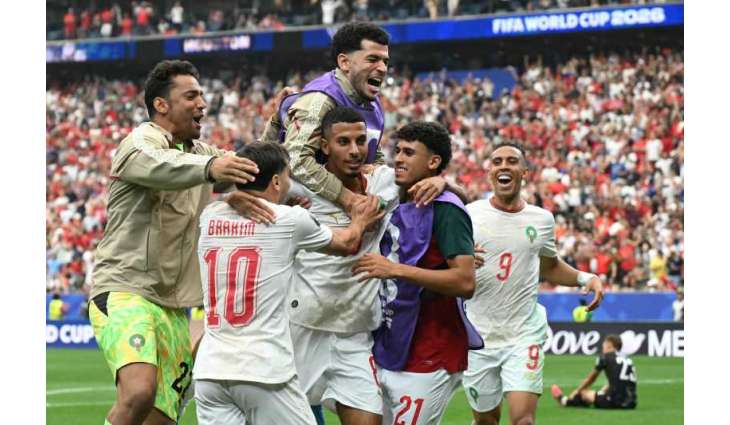
That structural argument is no longer theoretical. Africa's ten qualifiers have already produced nine teams reaching the round of 32, the strongest group stage return in the competition's history, the biggest proportion of qualifiers by continent (90%) and more than double the previous record of two African nations reaching the knockout stage in a single edition. The access created by expansion converted directly into results on the pitch, not just improved odds on paper.
The Financial Dimension and Its Conditions
FIFA's 2026 prize pool stands at $871 million, a 65% increase on the $440 million distributed at Qatar 2022. Every team at this tournament is guaranteed a minimum of $9 million for group-stage exit, rising to $11 million for the round of 32, $15 million for the round of 16, and $50 million for the champions.
For African federations operating with structurally under-resourced development systems, a floor of $9 million per World Cup appearance is a meaningful baseline. For several of the ten teams at this tournament, it represents the largest single financial event in their federation's history. The precedent is instructive: Morocco's 2022 semi-final run (the first by any African nation) triggered measurable downstream effects. CAFâ≢s commercial revenue grew by 90% between the 2021 and 2025 Africa Cup of Nations, with commercial partners increasing from nine to 23 over that period. Morocco's AFCON 2025 hosting alone generated revenues estimated at over 1.5 billion Euros, funding approximately 80% of the infrastructure required for the 2030 World Cup co-hosting. The 2022 World Cup performance was the catalytic event that set that trajectory in motion. Imagine the transformation this could bring to a nation like Cape Verde (Cabo Verde), who reached the last 16 of the tournament.
However, the financial opportunity carries structural conditions that African football's institutions must address directly.
First, prize money is only transformative if it is governed well. The historical pattern whereby tournament earnings are absorbed at federation level without clear reinvestment into academies, coaching pipelines, infrastructure, or women's football is well-documented. The expanded prize pool creates the conditions for development investment. It does not guarantee it. Accountability frameworks, transparent reinvestment mandates, and federation-level governance standards need to accompany the financial windfall if the structural effect is to be durable.
Second, a less-discussed issue threatens to reduce the actual value of those payouts. Only 18 of the 48 World Cup nations will receive their full prize money without US tax deductions. African federations face potential double taxation, once in the United States, then at home on payouts ranging from $9 million upwards. On a $9 million payout, that is a substantive reduction. It is the kind of structural detail that requires proactive legal and financial planning, not reactive discovery after disbursement.
The Visibility Premium
Ten African nations competing at a single World Cup, the largest representation in the tournament's history, generates a visibility premium that has direct commercial consequences, and those consequences extend well beyond the tournament itself.
The narrative around African football has carried a persistent qualification in global commercial markets: talented pool, governance concerns, unreliable return on investment. That narrative is being revised in real time, and the revision matters commercially. Sponsorship appetite follows credibility. Broadcast investment follows competitive relevance. The pipeline of African talent into European leagues, the continent's most significant football export, becomes more valuable when that talent has been seen performing at the highest level on the broadest platform.
Morocco's trajectory is the clearest available case study: from 2022 semi-finalists to 2025 AFCON hosts to 2030 World Cup co-hosts, with measurable commercial growth at each stage. The correlation between World Cup visibility and downstream commercial leverage is not theoretical. It is documented.
On a B2C level, we have seen the meteoric social following of Vozinha, the Cape Verde goalkeeper, from 46,000 followers before the World Cup to now 27.5 million (as of 7 July 2026) since their elimination. The optics are great, but how is this being capitalised?
The 48-team format gives more African federations and players access to that visibility premium. The strategic question is whether they are building the commercial and governance infrastructure required to convert visibility into durable revenue: sponsorship frameworks, broadcast strategies, academy investment models, rather than treating tournament appearances as isolated events.
The Counterweight
A balanced analysis requires acknowledging the constraint that the expansion also creates or amplifies. The fixture congestion concern (loudest from European clubs but real in its operational effect) falls disproportionately on African players who are simultaneously carrying elite club commitments. FIFPRO's documented 44% injury spike at Chelsea following the expanded Club World Cup is not an isolated data point. African players feature prominently across the clubs most exposed to calendar overload. The expanded World Cup adds fixtures at the international level to players already at physical capacity at club level. That is a player welfare issue, but it is also a performance and talent longevity issue that African federations have a direct interest in addressing through engagement with FIFA's calendar governance processes.
There is also a model tension within African football itself. The diaspora-heavy squads of Morocco and DR Congo represent one pathway to World Cup competitiveness. South Africa's entirely locally-born squad at this tournament represents another. Both are legitimate. Both require investment. A strategic over-rotation toward diaspora recruitment at the expense of domestic development infrastructure would, over time, hollow out the very pipeline that makes the diaspora approach viable in the first place.
At the time of writing, Morocco has become the first African nation to reach back to back World Cup quarterfinals (who could go on to another feat if they defeat France to reach the semi-finals) and could be followed by Egypt also (who are to play Argentina in the Round of 16). Whatever the outcome, the pattern holds. The federations that have invested consistently in technical leadership and squad depth, Morocco above all, are the ones converting access into sustained tournament performance. That is the structural test this piece set out, and the early evidence supports the thesis.
The Strategic Frame
The expansion of the World Cup has shifted the structural conditions for African football in measurable ways including more access, more prize money, more visibility, more leverage in player eligibility markets. Those are inputs, not outcomes. The outcomes depend on what African football's institutions, federations, and commercial stakeholders build on top of them.
The relevant questions for those working in this space are operational: How are federations planning to deploy prize money? What governance mechanisms are in place to ensure reinvestment reaches academies and development systems? Are dual-eligibility pipelines being actively managed as strategic assets? Is the commercial infrastructure being built now to convert 2026 visibility into 2027 and 2028 revenue?
The expanded World Cup does not resolve African football's structural challenges. But it removes scarcity as the organising constraint. That is a significant shift. What the industry does with it will determine whether 2026 marks an inflection point or a missed opportunity.

Related Posts